Meet Our Supporters: Alan’s Spine Race for Heavy
Meet Our Supporters: Alan’s Spine Race for Heavy
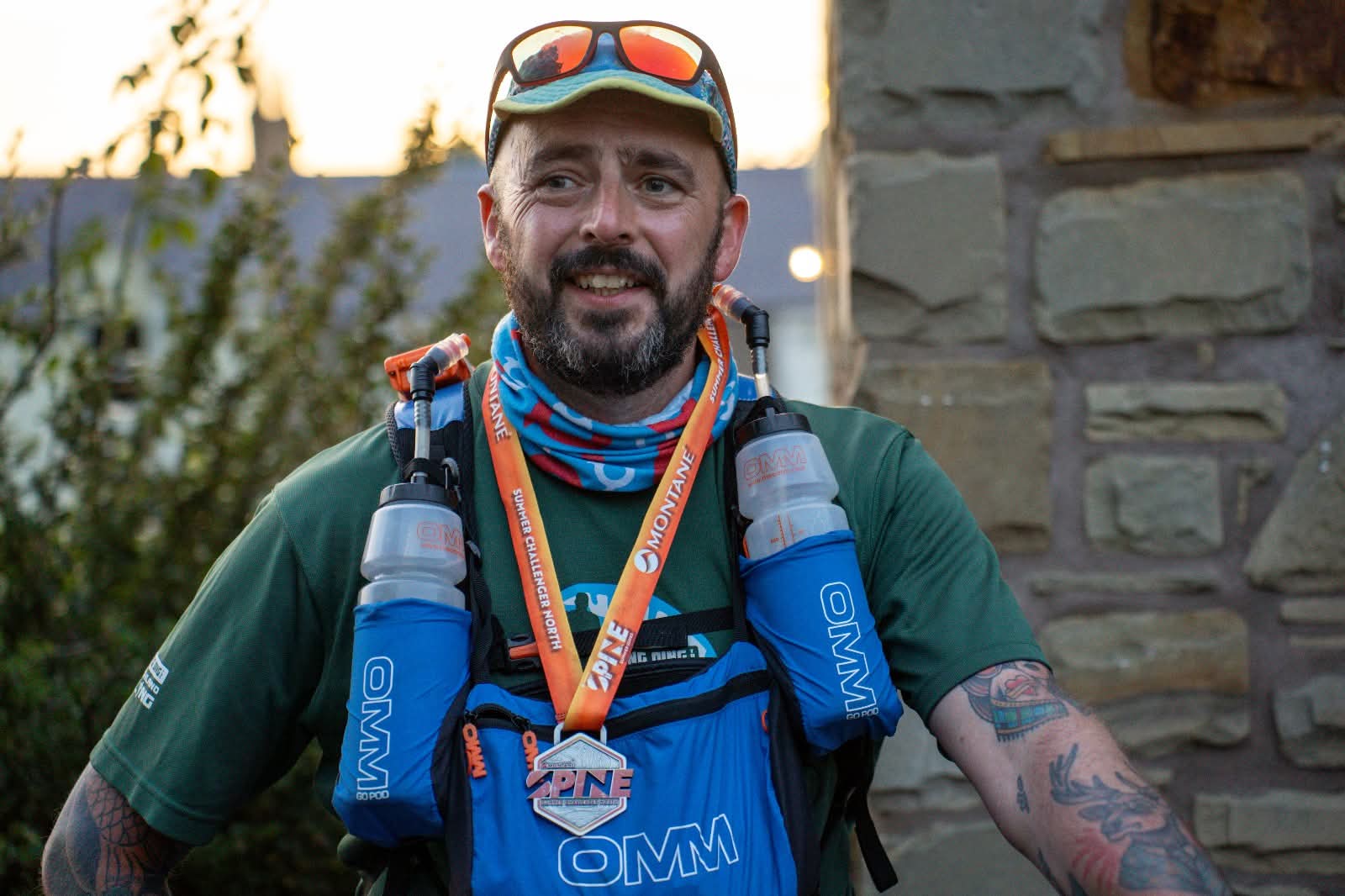
In June 2025, Alan Swadel took on one of the toughest endurance events in the UK: the Spine Challenger (North). Covering 160 miles of the Pennine Way, the race demands resilience, self-reliance and an unwavering commitment to keep moving forward through challenging terrain, and physical and mental lows. Alan’s challenge was undertaken not only as a personal test, but as a meaningful act of remembrance.
Alan ran in memory of his friend and mentor, David “Heavy” Whalley – a much-loved figure who has been instrumental in shaping Mountain Rescue in Scotland. Heavy’s dedication to service, and to the people behind every rescue have left a lasting mark on all who worked alongside him. Through this extraordinary effort, Alan raised an exceptional sum for Scottish Mountain Rescue, and we are enormously grateful for his commitment and generosity.
In the interview below, Alan reflects on his journey into the mountains, his time with the RAF Mountain Rescue Service, his friendship with Heavy, and the motivation behind taking on such a formidable challenge in Heavy’s memory.
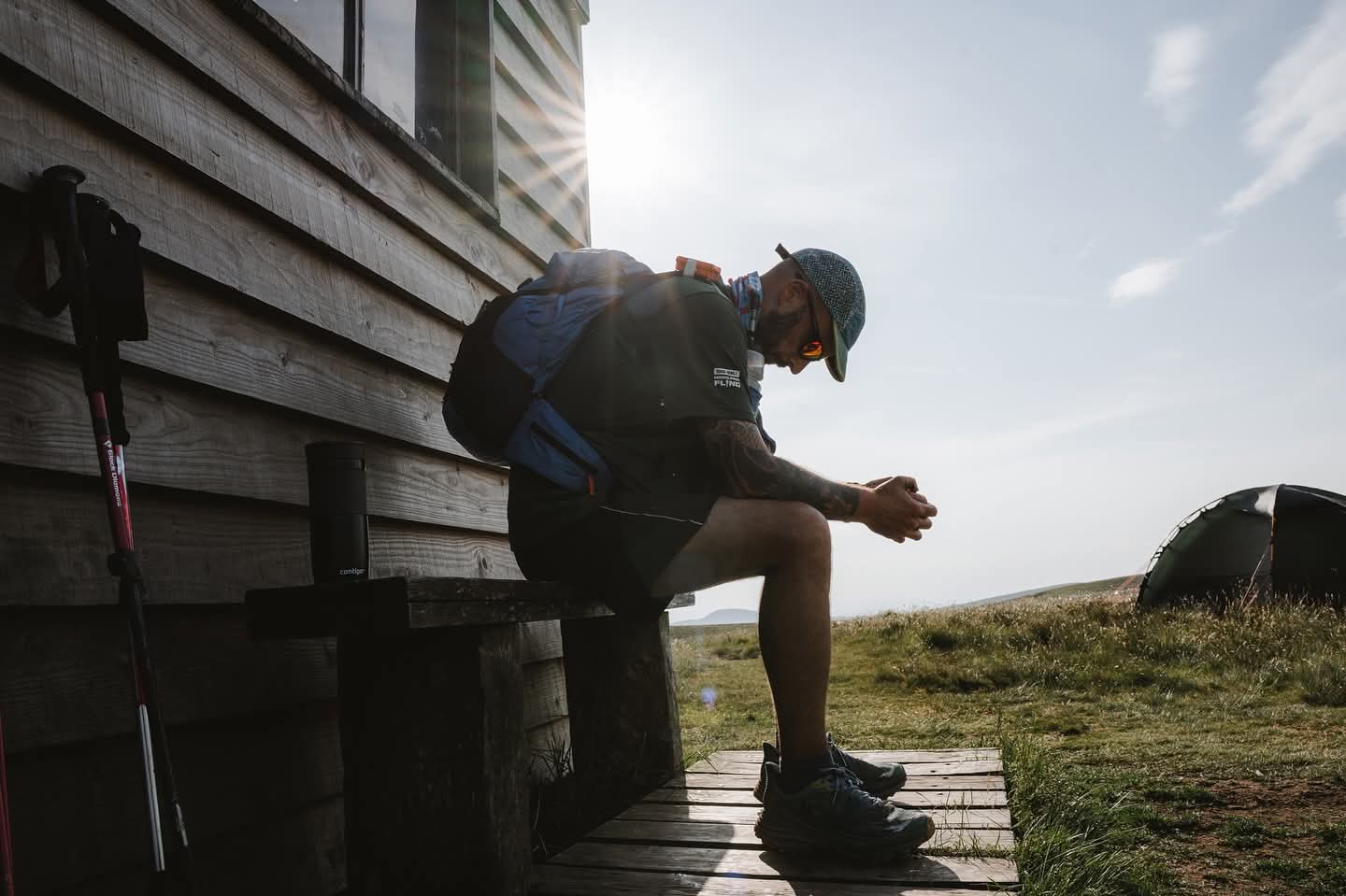
Image: Alan on the Spine Race, June 2025
How did your passion for the outdoors develop, and what role has it played in your life?
It started as a teenager really, I was in the cadets as a kid, and we used to go hillwalking and climbing fairly regularly – at high school we undertook the Duke Edinburgh award scheme which took us on various expeditions including our gold expedition to Ireland.
Can you tell me about your time in the RAF Mountain Rescue Service?
I joined the RAF Mountain rescue team at Kinloss in the late 1990’s – I’d just been posted to Kinloss from training with a few other lads. They all went onto the first line Squadrons & were very quickly away to exotic places like Florida with the Nimrod aircraft! I was posted to a 2nd line facility overhauling equipment which left me with lots of spare time on my hands at weekends – I popped into the Mountain Rescue team for a chat to see what it was all about and ended up joining after a trial period. I got to go to exotic places like Ballachulish, Crianlarich and Dundonnell on a weekend!
The RAF Mountain Rescue Service was formed during WW2 with the aim of rescuing downed aircrew. Over the years, aircraft safety became better, and crashes became less common however the potential remains. The RAF MRS is an all-weather, 24/7 365 days a year service with the majority of its work now taken by assisting the police and local civilian rescue teams across the country. The RAF MRS has teams at Lossiemouth in Scotland, Leeming in England and Valley in Wales.
Although I spent most of my time on Mountain Rescue at Kinloss, I was also very fortunate to also spend 3 years posted full time to Mountain Rescue at Leuchars. These 3 years exposed me to a wide variety of incidents, some very sad and traumatic including military aircraft crashes and protracted searches for missing people, but also many very rewarding. I was out training with the team almost every weekend – seeing all areas of Scotland and using the time and opportunity to improve my fitness and training. I was delighted to be able to pass the RAF MRS team leaders course, as well as various civilian recognised mountaineering courses. I left the military in 2012 and even to this day, I still miss Mountain Rescue.

Image: Alan on the Spine Race, June 2025
Can you tell us more about your friend, David ‘Heavy’ Whalley?
It’s hard to summarise Heavy in a few words – a wee guy in the flesh but a huge character. I remember thinking “Who’s this noisy wee guy” when I first met him at Kinloss – he relentlessly ripped the mickey out of me for being a Dundee supporter! A fair cheek for an Ayr United fan I thought! We spent loads of time on the hills together; he was full of stories and advice – he’d seen and experienced it all, sometimes through having epics of his own in the past. He was a sounding board for everyone – always there to give advice without judgement and wasn’t shy in telling if you’d screwed up. Heavy was one of the first incident commanders on scene at Lockerbie – this incident really affected him personally. A lot of the guys at Lockerbie really struggled to comprehend what they faced. They were trained to rescue people, but there was nobody alive to rescue. Everything was on a horrific scale never seen before. He was a huge advocate for PTSD recognition in the military at a time when it was still regarded as a sign of weakness by the senior leadership and not taken seriously.
Heavy spent most of his life helping other people, both professionally and in his own time – I was privileged to be able to call him my mentor, my friend and he is sorely missed.
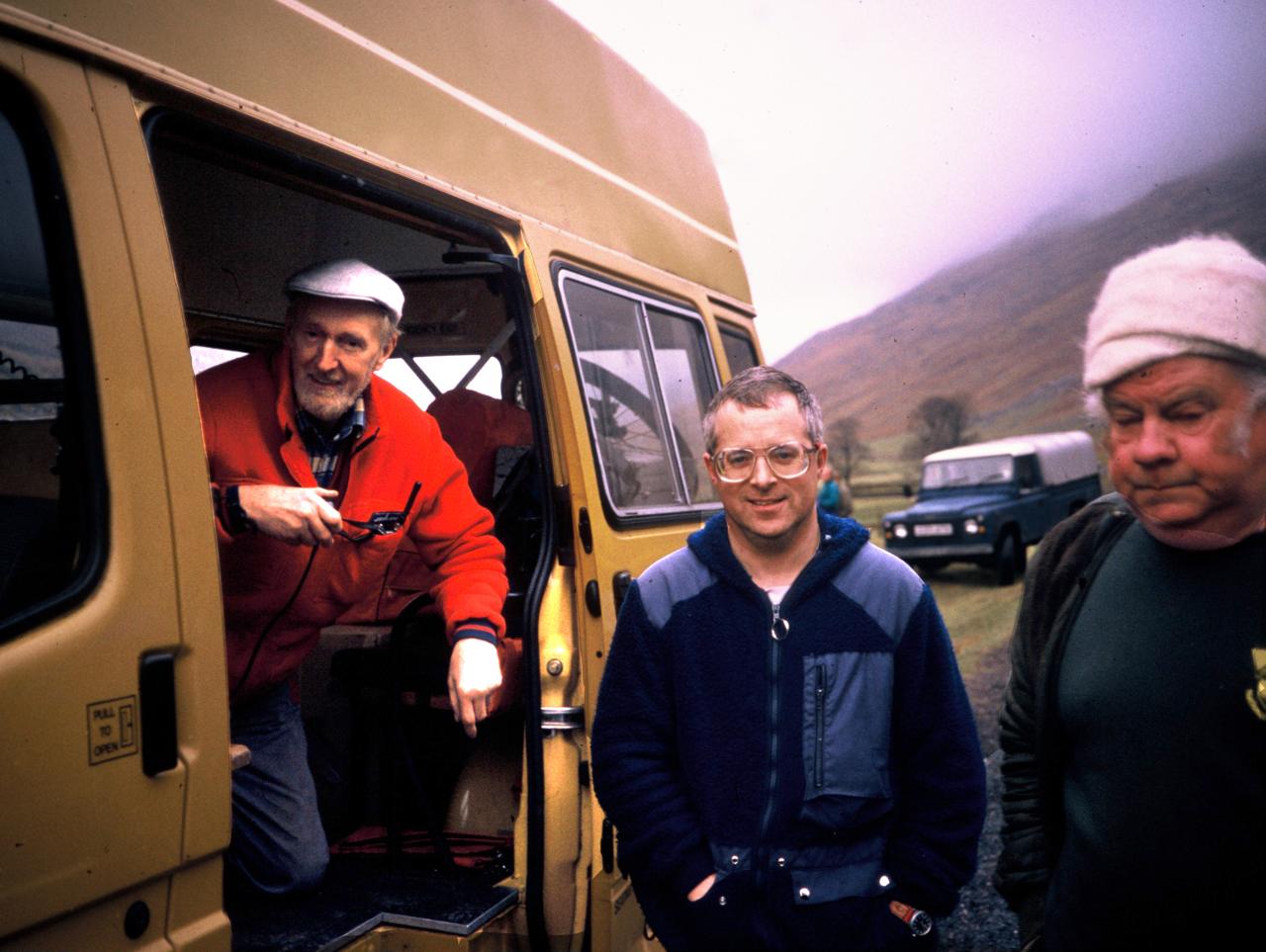
Image: Hamish MacInnes, David ‘Heavy’ Whalley and Willie Elliot in Glencoe
Why did you choose to fundraise for Scottish Mountain Rescue?
Heavy was very close to the mountain rescue community (as we all were) as we worked so closely with them all the time. Having been there many times, I’m acutely aware of the important work they do to assist people in their time of need, often in very challenging conditions. It’s also worth noting that the majority of these rescuers have full time jobs to juggle as well as being on call for rescues. Funding is very tight, so fundraising is critical. Heavy was passionate about the “wee teams” away from the tourist honeypots that cover huge areas of land with a geographically spread small number of volunteers. By raising for SMR, hopefully the funds can distributed among the teams towards something in his honour.
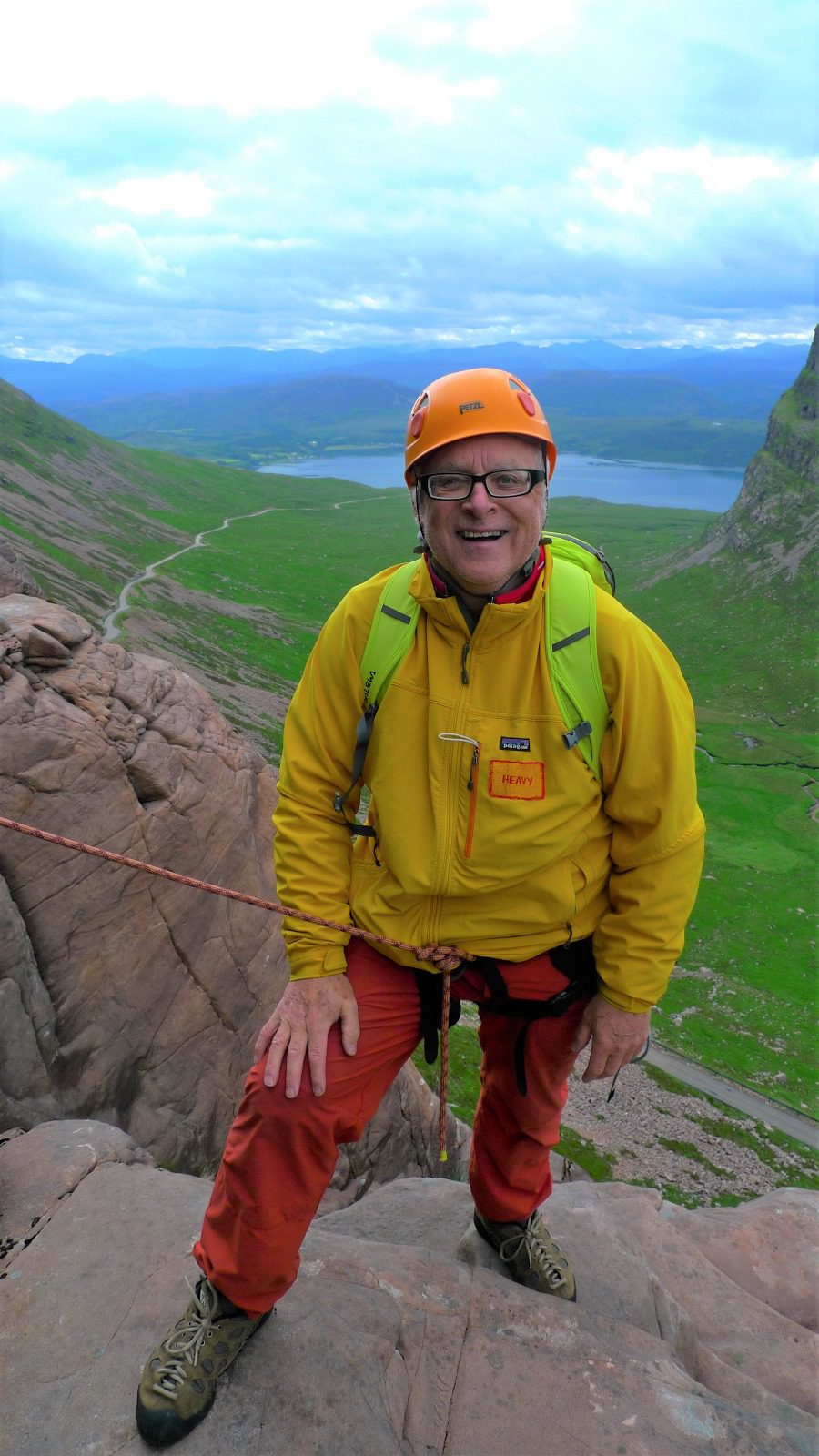
Image: Heavy climbing at the Bealach na Ba
What inspired you to take on this particular challenge in memory of Heavy?
I’d been speaking to him about it before he died – he thought I was crazy. Given the nature of the event and its length, it felt appropriate to do it for charity and SMR was the obvious choice. Even more so, when he passed away.
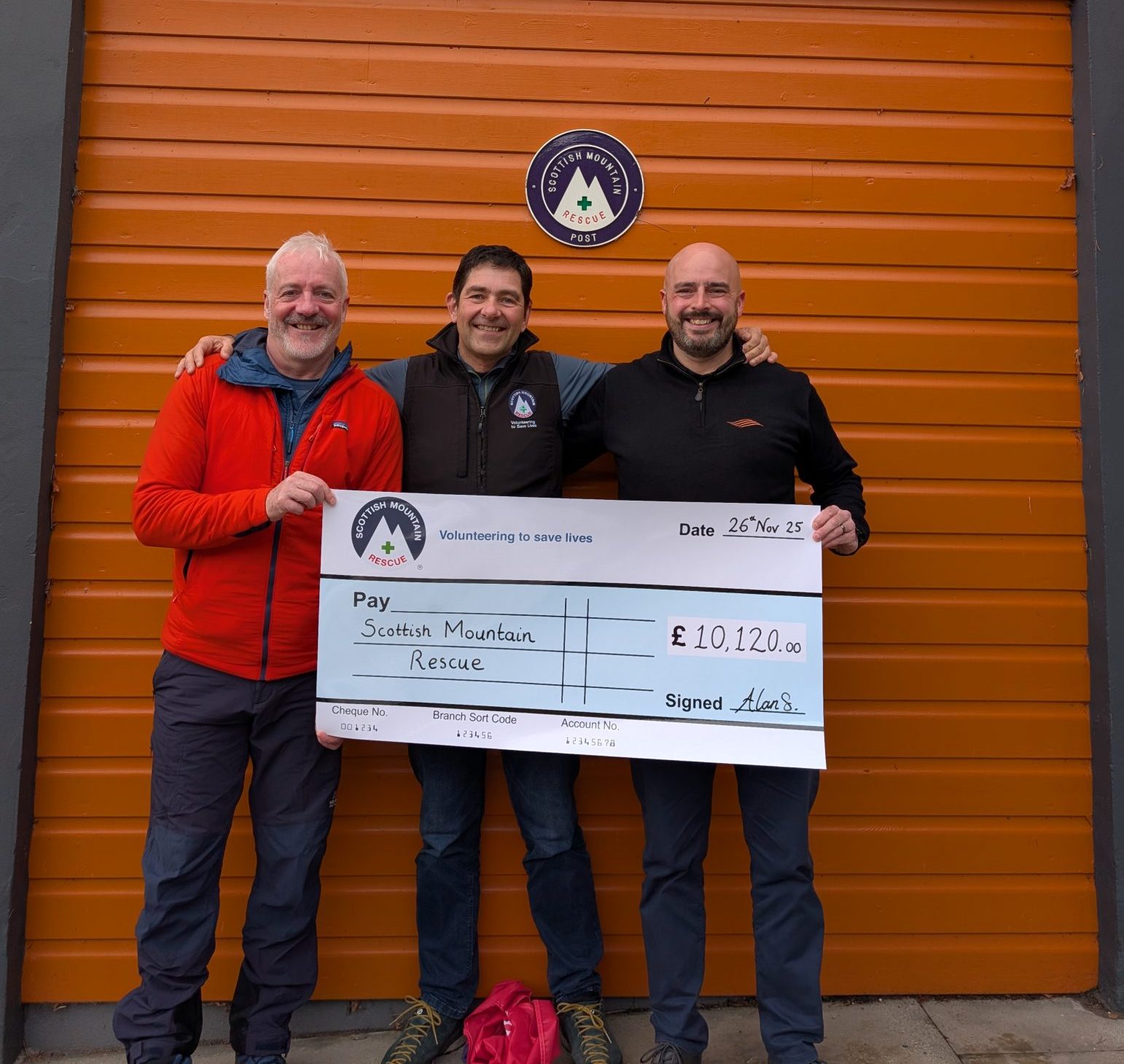
Image: Glenmore Lodge MRT members George and Bill accept Alan’s donation on behalf of Scottish Mountain Rescue
How did you prepare mentally and physically for this challenge, especially with the added emotional significance?
I’ve done 20+ ultramarathons over the years, but this was the longest and hardest. I was always wary of doing this type of event for charity as the chance of not finishing was always there, and I didn’t want to let anyone down. I remember being close to stopping around the 90 mile point and after a few messages with key people and a stern word with myself, pushing on to get it done – a lot of people had committed funds to the cause and I didn’t want to fail.
What has been the most rewarding aspect of fundraising in Heavy’s memory?
Being able to discuss the event with him beforehand and then dedicate it to a cause close to his heart means a lot. I’m massively grateful to all who supported me – lots of generous financial donations, family & friends support and excellent support from my employer Edrington who (via the Robertson Trust), triple matched my fundraising meaning that I could hand over a cheque for £10,120 to Scottish Mountain Rescue – a really impressive amount that will hopefully make a difference. I’d love it if the teams could have a think and decide for a use for this money in memory of Heavy. Also, Heavy’s book has recently been released – for anyone with a love of the hills and/or some great story telling it can be purchased from lulu.com – link below
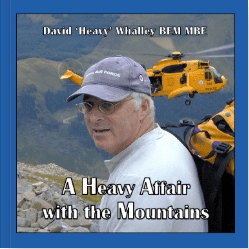
You can read our book review here too: A Heavy Affair with the Mountains – David ‘Heavy’ Whalley BEM MBE Book Review – Scottish Mountain Rescue.
What advice would you give to someone considering a similar challenge?
A few things really 1) Join some of the various support groups on social media, lots of very good advice from others that have either completed the race previously, plan to race and are in the same position as you or are on one of the teams supporting the race. 2) Research the route – I must have spent hours looking over and over the ordnance survey maps of the Pennine Way ahead of this event. 3) Practice / train using your kit 4) Try and enjoy the event! There will be dark moments of “type 2 fun” but enjoy it, look around you and get a good blether with other competitors along the route and you’ll soon see the miles tick over.
What’s next for Alan?
I’ve been pretty lazy in the 2nd half of 2025, but things have been busy at work and at home. I’ve got a place for the West Highland Way Race in 2026 so early in new year will need to see my get my finger out with the training again! I’d love to go back and attempt the full spine race (268 miles) at some point but this is a massive undertaking and would need careful planning and training.
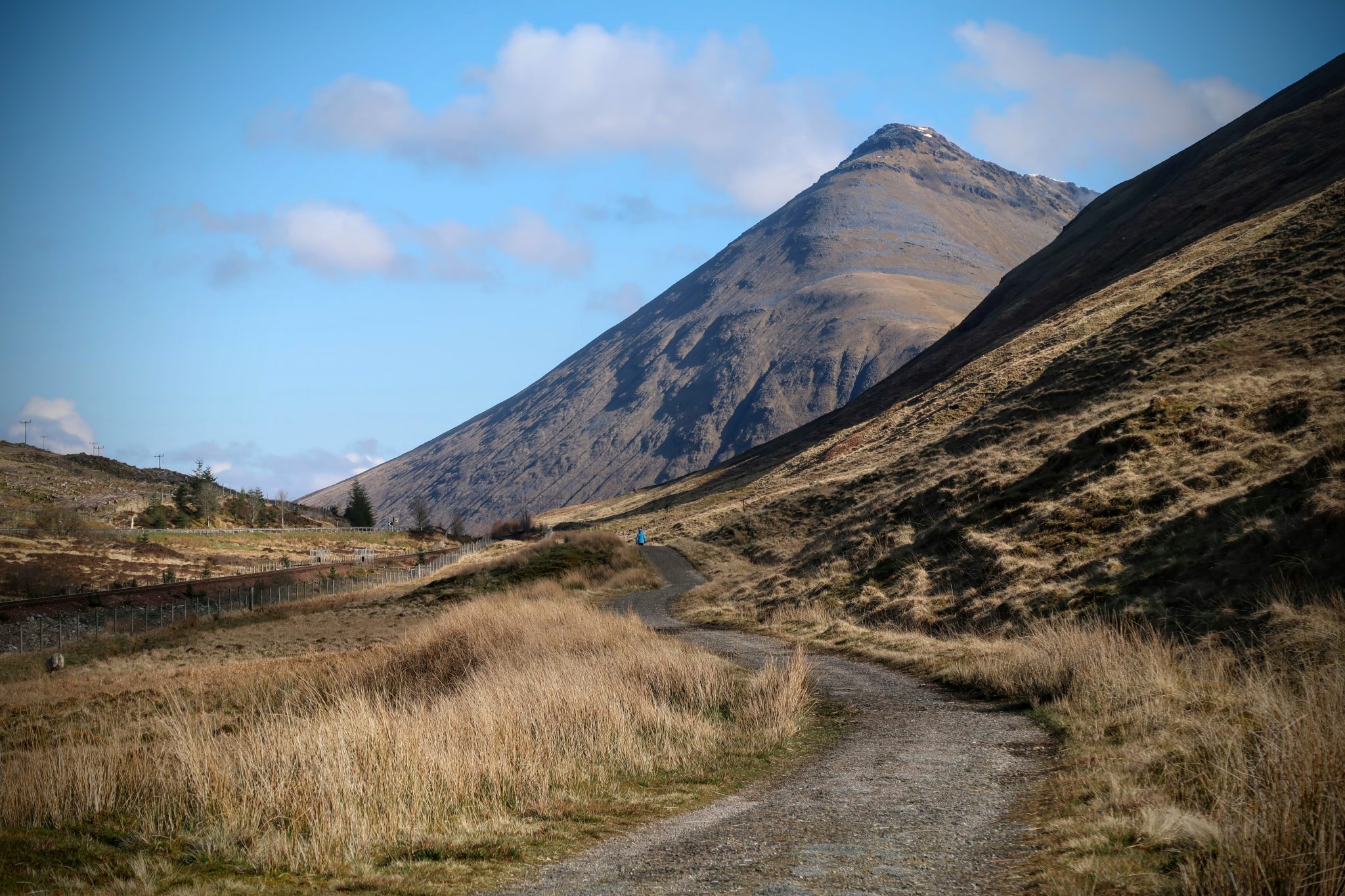
Image: Tyndrum to Bridge of Orchy on the West Highland Way
Alan’s fundraising total of £10,120 will go a long way in supporting our 26 volunteer mountain rescue teams across the country. Donations like this help cover everything from volunteer wellbeing and personal accident insurance, to training, equipment and the everyday costs teams face just to stay ready – whensoever.