50 years of service – celebrating John Willis, Ochils MRT

50 years of service – celebrating John Willis, Ochils MRT
As part of National Volunteers’ Week, we’re celebrating the remarkable contribution of John Willis from Ochils Mountain Rescue Team.
In September this year, John will mark an extraordinary milestone: 50 years as a mountain rescue volunteer.
Thought to be one of only a handful of people in Scotland to reach half a century of service with a mountain rescue team, John has witnessed enormous changes in rescue techniques, technology, training and the outdoor community during his time with Ochils MRT.
From answering his first callout in 1977 to helping shape training programmes and supporting the development of the team for generations of rescuers, John’s contribution has left a lasting mark on mountain rescue in Scotland.
We recently caught up with John to reflect on his journey, the memories that have stayed with him, and what has kept him volunteering for five decades.
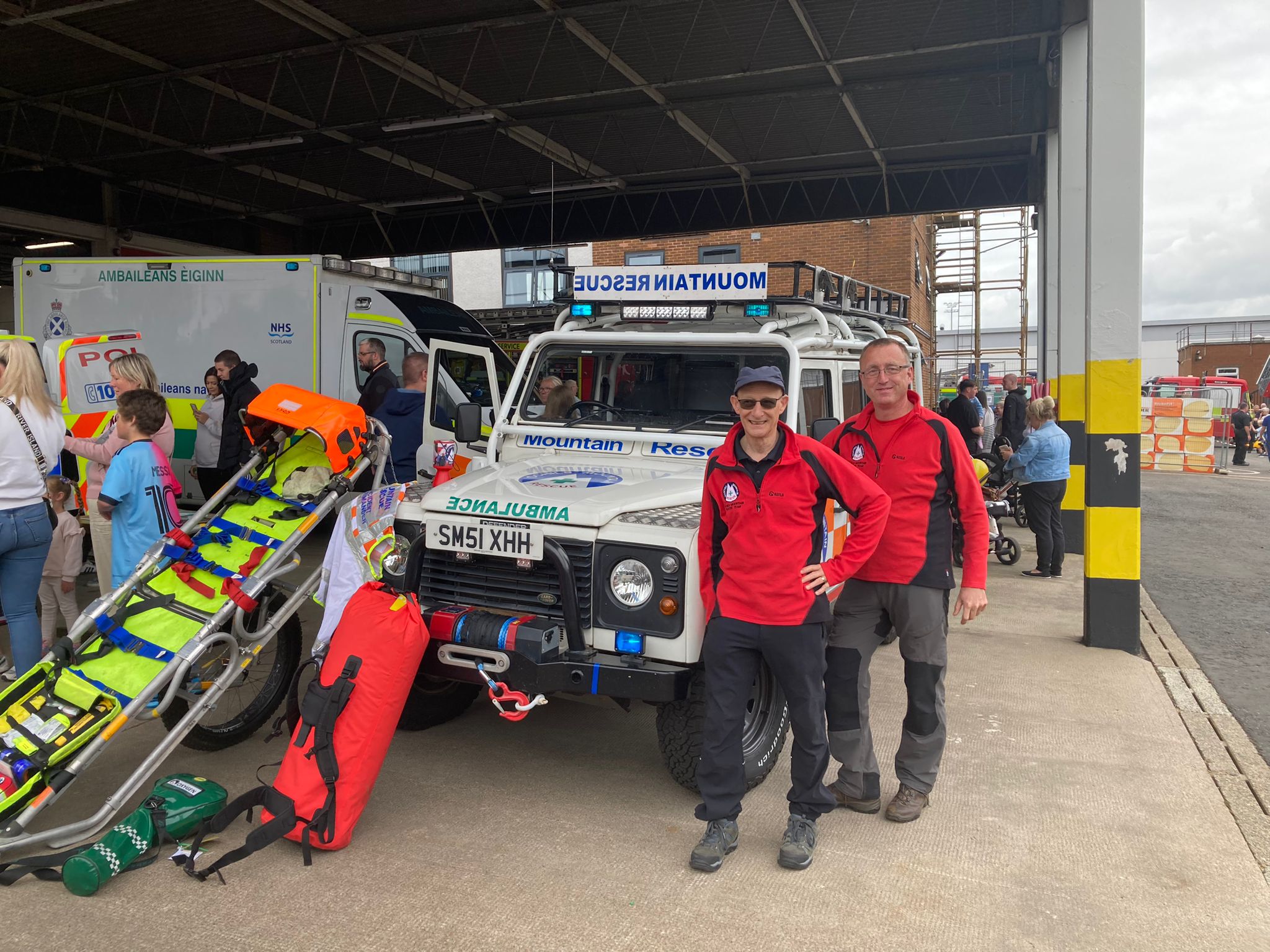
Where were you born and brought up?
I was born in the London Borough of Willesden and brought up in Preston Road near Wembley where I lived for 23yrs.
How did you end up in Scotland?
I was married to a Scots lass who had originated in Edinburgh and it was at a time when we were thinking of buying a house and starting a family. Property prices in London were horrendous even then. A job opportunity came up at The University of Stirling, a very young university then, which I secured and so we moved to Alva. Later on I took up Teaching at our local F E College in Alloa until I retired in 2004.
What drew you to the hills?
I suppose having moved to an area with great views of the hills that eventually I would be drawn to them. Not many big hills in London. It was the team which really got me involved and then becoming involved with the local Boys Brigade Company. One of Whom later joined the Team and is still a member of the team today.
What inspires or motivates you in life?
Now, wife and family mainly and trying to give something back, whether it be skills, knowledge or encouragement. In my teenage years becoming a chef.
I am happiest being active.
I enjoy gardening and spending time in my greenhouse. I cycle when I have the time and enjoy ocean and river cruising. Family is very important to me, and I was pleased to be able to help my daughter and son-in-law with a self-build project that took three years to complete.
I value my work with the team, I’ve met so many great people and learnt so much.
And I still enjoy the occasional project that taxes the brain and provides a good problem-solving challenge.
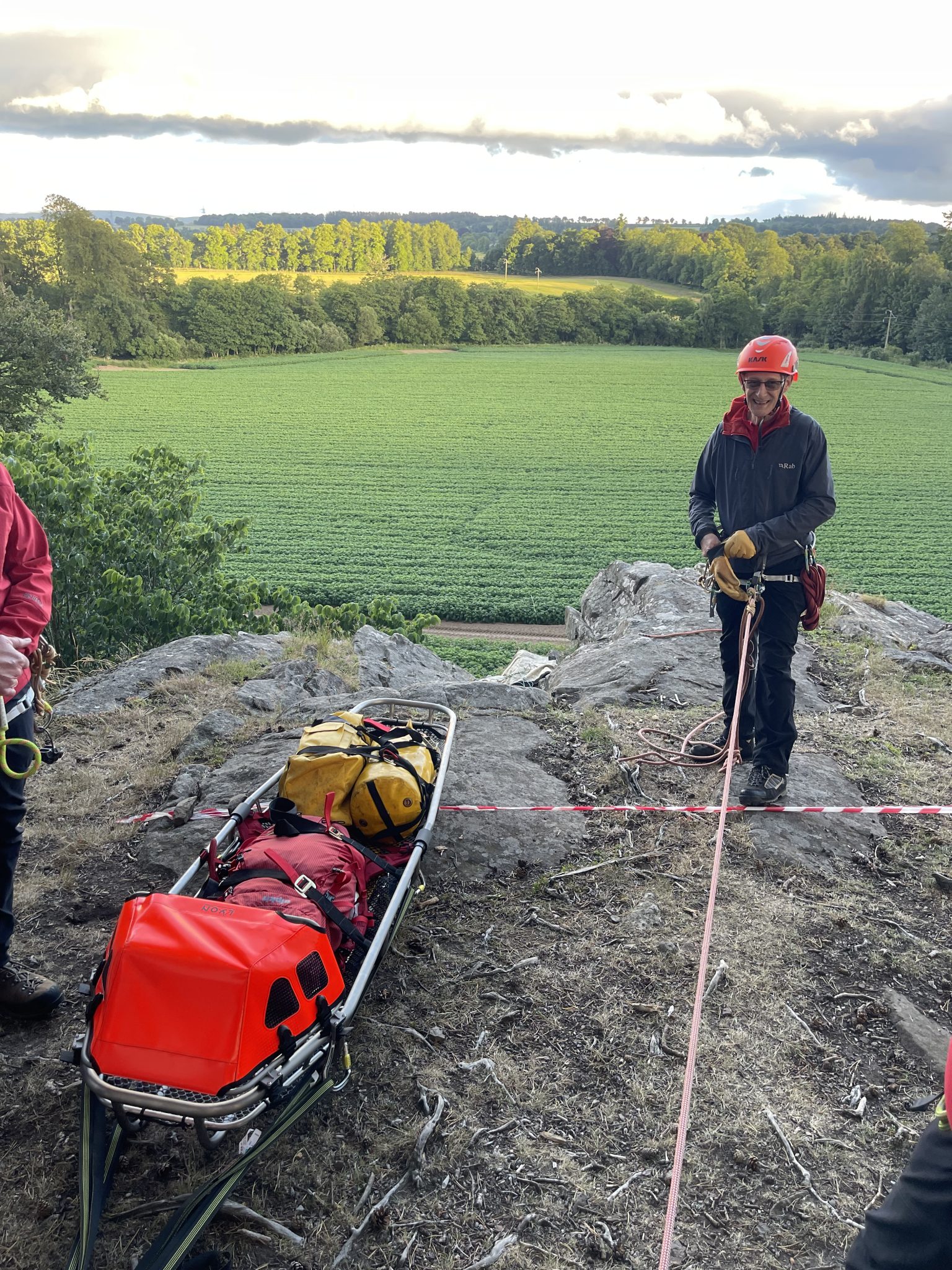
What drew you to Mountain Rescue?
I had not long moved to the north side of Alva from the south side, my new house was close to the slopes of Craigleith, which greet me every morning, It was Maybe June 1976. I came home from Work to Find the hill swarming with people looking for a missing 7/8yr old girl. Her friend had been found alive approx 200ft below the cliff.
The day had started out as a fine sunny summer day and typically for Scotland at around midday the weather changed dramatically with heavy rain and the cloud coming down to the 400 ft mark.
The team were out including a lot of local volunteers and some of my neighbours. I felt totally helpless as I had no experience of the hills and thought I would be more of a liability than a help. Very frustrating.
Sadly the missing girl was found the following day during the morning and declared dead on scene.
Much later on I got to know both families; the younger brother of the girl who had died joining the Boys Brigade and joining me on hill expeditions.
When did you join the team?
Following that incident there was quite a lot of local media interest and it was used to ask for new members to join the team. So I duly went along to the first training session, which was always held on the first Sunday of the month. That was September 1976, Then my Mountain Rescue education began and continues to this day 50yrs later.
What John’s teammates say:
Ben Law, Team Leader, Ochils MRT
“John was one of the team leaders when I started with the team and it was in fact John who invited me to come along as a trainee. I guess there is some symmetry in the situation, since I am now Team Leader and John is saying goodbye to the team. [John intends to step down from the team in October]
In between times, John has always been there. Whether it’s training or a callout, John hasn’t really missed much. Away from the operational side, he has also been a committee member on numerous occasions and is always one of the first to volunteer to help put kit away after a shout.
He is an inspiration to younger members, a mentor to new incident managers and a source of knowledge that everyone has benefitted from. It’s fair to say that after 50 years the team won’t be the same without him.“
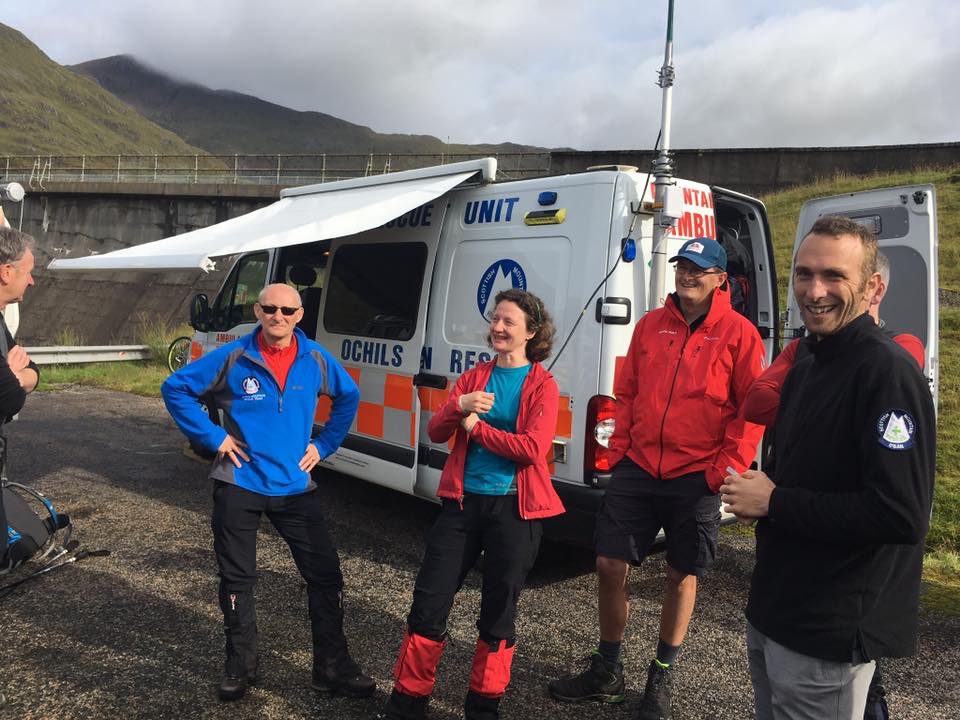
Can you recount some significant stories from within your team?
It’s very difficult to recall them all as there are many, but for me perhaps the abseiling accident that a former team treasurer had while on training session, which sadly left him with some permanent brain injury. He maintained contact with the team and chaired our AGMs. It brought home the need to always be vigilant in checking each other and technical set ups before we carry them out. No matter how experienced we are none of us is infallible.
The loss of Peter Mckellar in his late 30s to cancer, I had introduced him to the team when he was 18 he was a much loved member by the team as a whole and was greatly missed.
Any memorable rescues?
I can always remember my first call out as it was soon after becoming a full team member. The call came about 5pm on a Saturday it was March 1977.
A group of three people from Tranent had been practising ice axe breaking on the south slopes of Ben Cleuch. There was heavy snow in the Ochils that winter some of which lay until July. The group 2 men and women had finished what they had been doing and were descending the hill into the Daiglen having put all their axes away but still had their over trousers on. The lady slipped and slid down the steep slope and was stopped when she hit a boulder damaging her coccyx.
The weather was wet on the lower ground turning to snow above the second level of the Law and a white out. The team got to them at about 7pm, by then dark. She was carefully packaged and placed on the stretcher. There were deep drifts in the glen and it was decided to take her up onto the ridge of the Law and down the front to the bottom of the Law where we lowered her to the right of the crags where there is a smoother gully, over the Gannal burn, there was no bridge in those days, and along the rock path into Tilly glen the handrail wasn’t in existence then either. We arrived at the car park at around 10pm. We later heard she had sustained a compression fractures to lumber vertebrae.
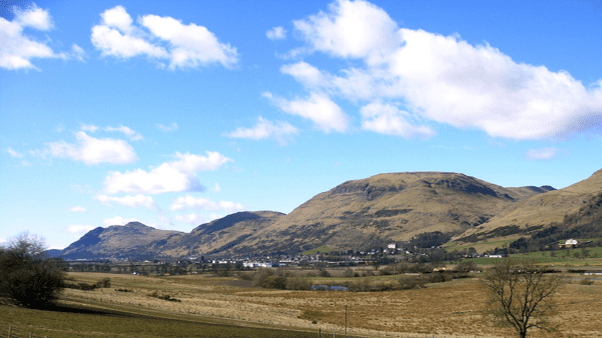
Image: View of the central Ochils, Ben Law
The second rescue I remember well was on Dumyat.
I received a call from Central Scotland Police regarding a man who had fallen near the summit while trying to retrieve a map that had been blown from his hand. Initially it was thought to be a head injury, but after speaking to one of his companions and receiving an assessment from our first aiders on scene, it became clear that a serious abdominal injury was the greater concern.
Time was against us. It was late afternoon, darkness was approaching, and in those days search and rescue helicopters were not permitted to fly after dark unless already airborne. I made the case for a helicopter evacuation and, after some discussion, approval was granted.
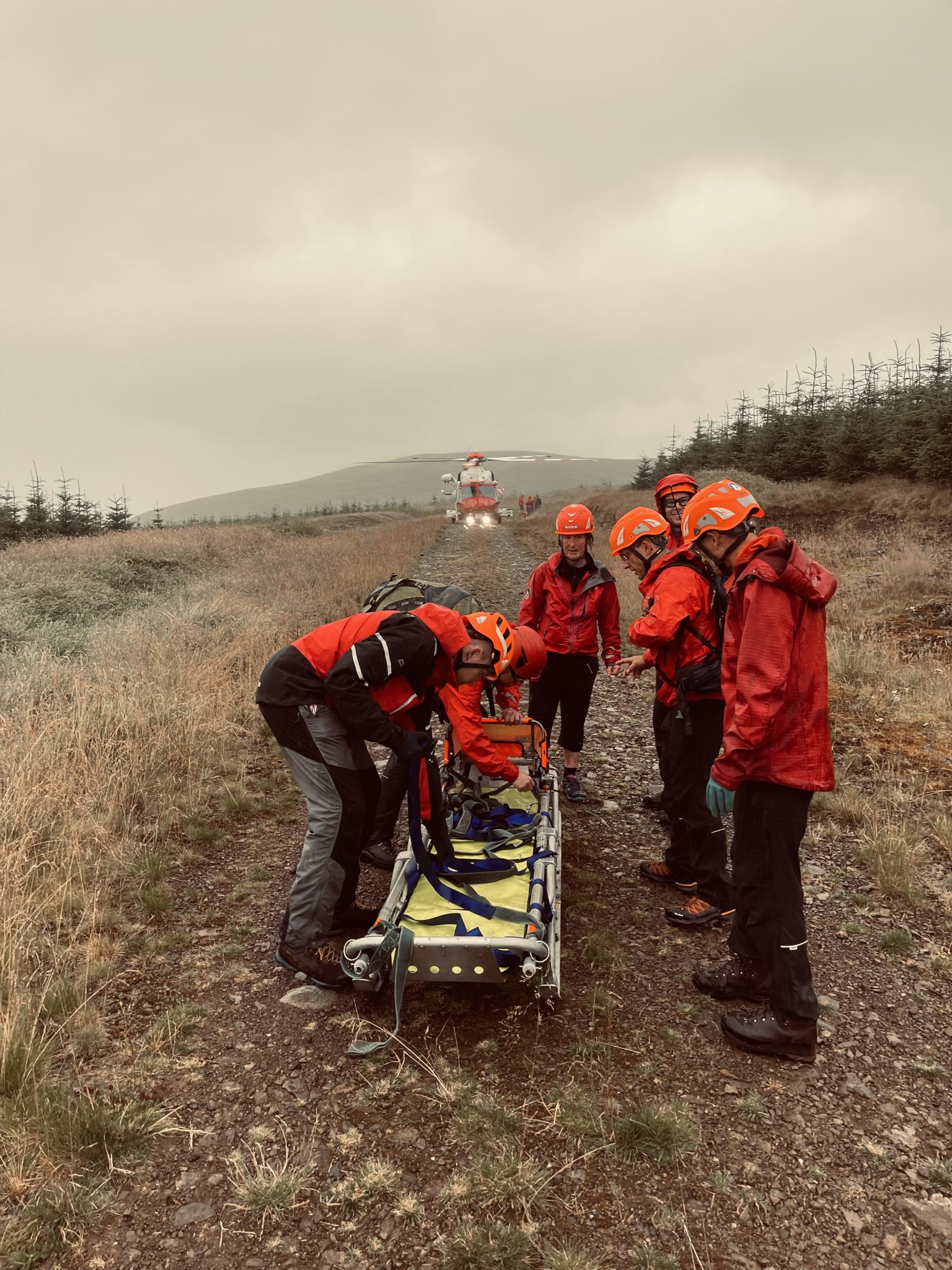
The helicopter arrived before dusk and within 20 minutes the casualty was being assessed at Stirling Royal Infirmary. When one of our first aiders later went to retrieve our stretcher, he discovered the casualty was on his way to theatre to have his spleen removed.
It proved to be the right decision and marked the first helicopter evacuation requested by our team.
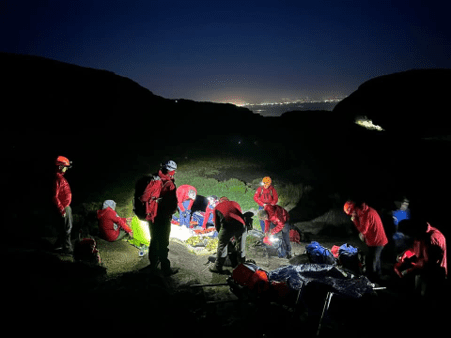
Image: Callout in a similar location on Dumyat in 2025, Ben Law
The third incident was probably one of our earliest encounters with the mobile phone. We received a call to search for three people who had got lost coming off Ben Cleuch, and had been benighted. The information was coming via the Police, who back then wouldn’t allow us direct access to the Missing persons phone number. The information suggested that the missing people were in the vicinity of Ben Buck. After some time on the search the message came they could see lights from the south putting them between Ben Ever and the wood hill. The search was duly switched to that area.
It was decided to call for helicopter assistance, SAR now having been switched to HMS Gannet who used Sea Kings which were just starting to introduce Night Vision Capabilities. They arrived on scene and commenced their search pattern. More information came in that the lights were in fact from the north. It was decided that the helicopter would land at the field by our then post at the Councils Ochils nurseries between Alva and Menstrie and pick up a team member to help with the air search. Willie Miller got the short straw. The cloud was beginning to lift a little and the heavy rain eased off which had been going on all evening. This was now about 10pm. In the meantime we had a team member who had volunteered to check out some new fences the shepherd had erected on Ben Buck recently, The shepherd was able to indicate where they were.
I remembered that on helicopter training session we had, had with The Navy that the crew had recounted a rescue where they had seen the back light of a wrist watch using NVG. I recounted this to the senior Police officer and suggested that they contact the missing persons to switch on their phone and hold up the light when they heard the helicopter in their vicinity.
The team member who had returned to Ben Buck had by this time found the group but comms was not particularly good.
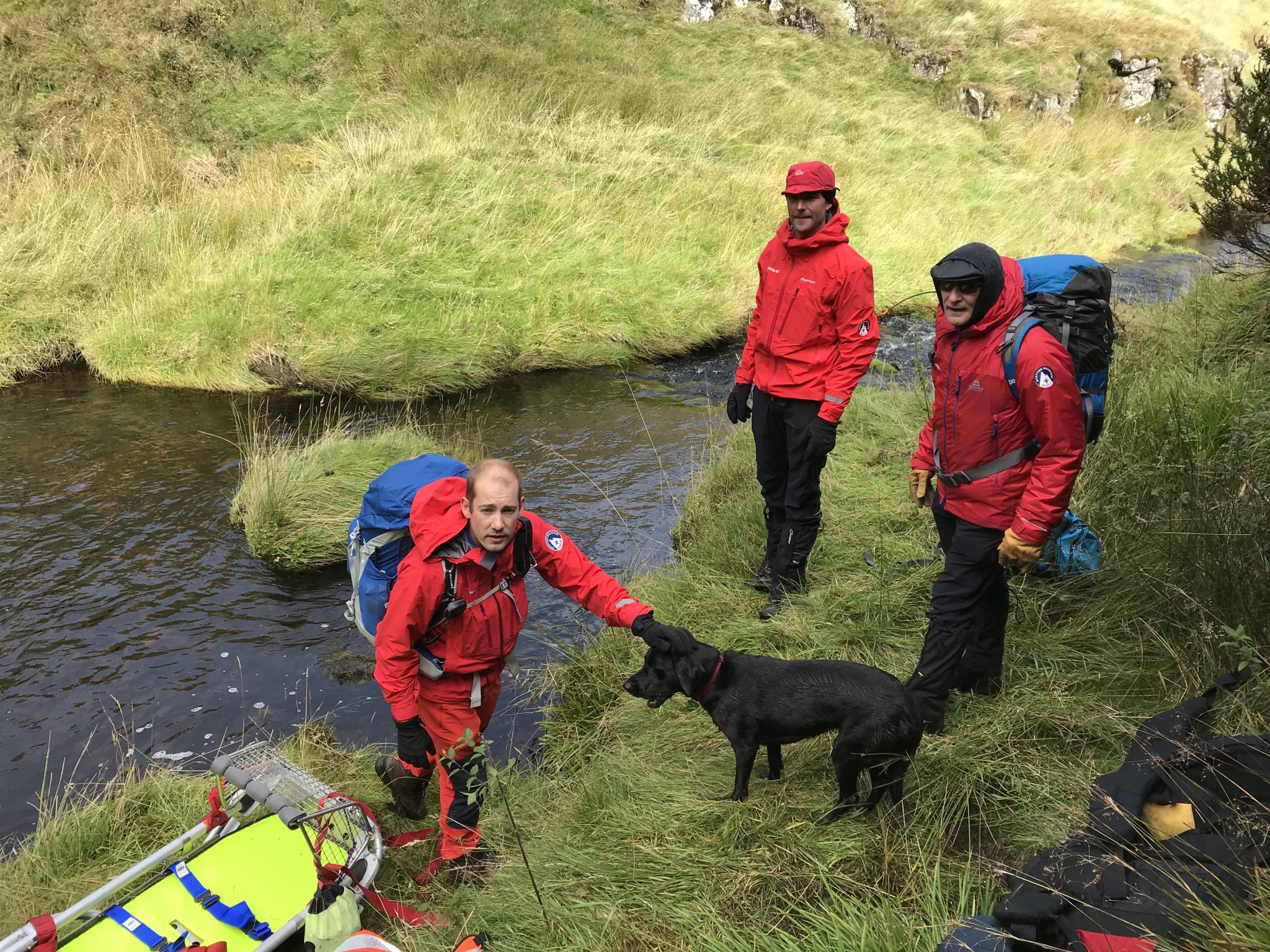
The missing persons heard the helicopter and carried out our instructions and were seen. The crew were able to land on and pick up the folk and our team member. The group consisted of two men, a lady and one very wet and miserable Labrador.
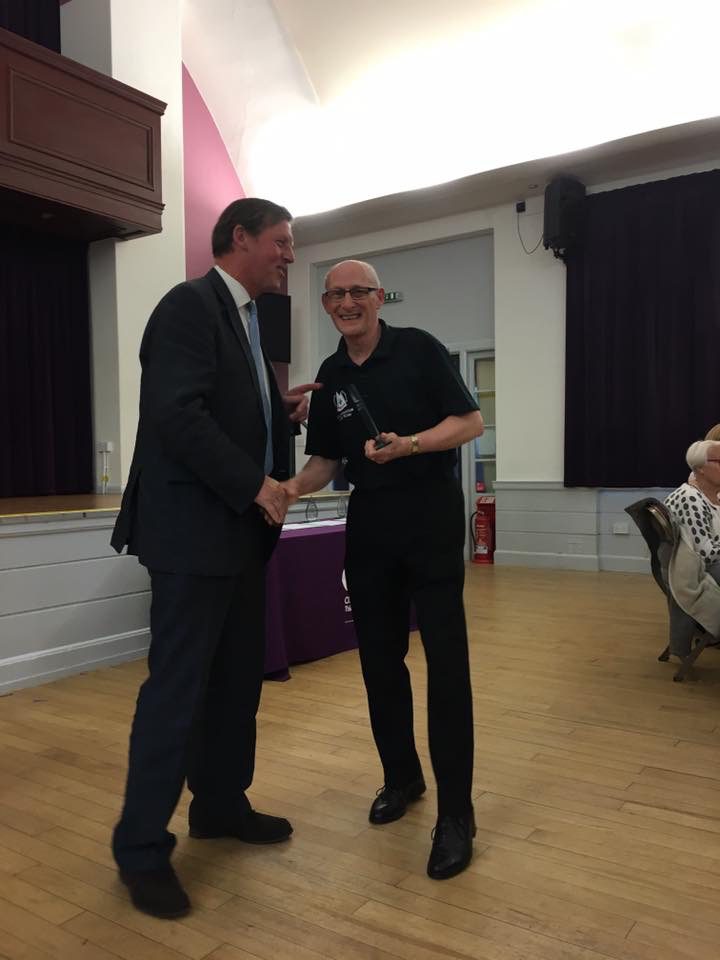
Looking Back on 50 Years of Mountain Rescue
What are some of the major milestones in your time in Mountain Rescue?
There have been many over the years, including:
- The team becoming a full member of the Mountain Rescue Committee of Scotland, now Scottish Mountain Rescue.
- Becoming Training Officer and Team Leader before the change to the team structure.
- The introduction of helicopter training for mountain rescue teams.
- Welcoming our first team doctor.
- Changing from a group of 10 Team Leaders to a single Team Leader and Deputy structure.
- The formation of the Central Scotland Rescue Group with Central Scotland Police, Lomond and Killin teams.
- Joint exercises with the Central Scotland Rescue Group, which continue to this day.
- Increasing our training programme from nine sessions a year to 24, including winter and summer training weekends.
- Graham Percival introducing us to Casualty Care.
- Introducing a structured training programme for new members, thanks to Andy Cloquet.
- Obtaining our own premises, purchasing our first Land Rover and later our first communications vehicle. Having a permanent base and fixed control room was probably one of the biggest developments.
- Taking over as Deputy Team Leader for what was meant to be a temporary period but became five years, before later becoming an Incident Manager.
- The change from Ministry of Defence search and rescue services to Coastguard-contracted helicopters.
- Access to new technology, which has helped enormously.
- The inclusion of the East and West Lomonds, Bishop Hill and Fife within our operational area.
- The introduction of national mountain rescue training courses.
Who has supported you throughout your Mountain Rescue journey?
Friends and family, and particularly my wife, Gill. Without her support, I would not have been able to continue for so long.
Like many volunteers, there have been sacrifices along the way. I missed bedtime stories when the children were small, and mountain rescue has always required understanding and support from those closest to you.
What motivates you?
For me, it’s returning people safely to their friends and family.
Even after all these years, I don’t think the public always realise that mountain rescue in Scotland is a volunteer service. People freely give up their time for the benefit of their communities. At its heart, mountain rescue is the outdoor community looking after themselves and anyone who gets into difficulty in the mountains and wild places.
How have you seen Mountain Rescue change over the last 50 years?
Mountain Rescue has become much more professional in its approach.
When I joined, volunteers largely provided their own clothing and equipment. Today, teams provide kit specifically for Mountain Rescue.
Communications have changed dramatically. We started with just six radios, donated by the local Rotary Club. Now every team member is issued with Digital/analogue radios by Scottish Mountain Rescue.
Other major developments include:
- More rescue bases and vehicles (including our own) – which were supported by other charity groups particularly the Order Of St John.
- Access to SARCALL, digital mapping and Police Statistical information on missing persons. Big improvement on a map, note book, and pen in the back of a car.
- Phone Find technology, which we have found to be pretty accurate.
- More multi-agency working
- New outdoor activities such as hang gliding, parascending, mountain biking and canyoning have changed the nature of some rescues.
Since Covid and the increase of use of social media, there has been an increase in less outdoor-informed folk going on to the hill. The types of incidents haven’t changed much, a lot of lower leg injuries which have been caused by dry fine gravelly paths, which tend to act like ball bearings under the sole of shoes and boots. Perhaps an over reliance on mobile phones for navigation.
There has also been an increase in incidents involving vulnerable and missing people linked to mental health concerns.
How do you see the team developing in the future?
That is difficult to predict. At the moment, recruitment has broadly kept pace with the team’s needs, although it would be good to see a younger age profile coming through.
I suspect recruitment may become more challenging in the future, as people’s working lives are increasingly unpredictable and fewer members work locally.
Technology will undoubtedly play an even greater role in mountain rescue. I can see increased information sharing and closer collaboration with other emergency services, particularly if they gain wider access to systems such as SARCALL.
I also think mountain rescue teams may take on a greater resilience role, particularly as changing weather patterns lead to more frequent requests for assistance from local authorities and partner agencies.
What gives me confidence is the people. We are fortunate to have talented, dedicated members within the team, and I am sure they will continue to adapt to change, as we have in the past.
Reflections
One of the greatest privileges has been seeing how our team has grown and developed over the years. We have an amazing number of different skills and knowledge in the team from so many different backgrounds – enhancing our team and experiences.
I suspect that the reason that those of us that have are or about to complete 50yrs service are few in Mountain Rescue is due in part that previous insurance cover ceased at age 75. It is now set at 80yrs so I suspect there will be an increase in the future of members reaching 50yrs service.
Someone once said to me it was like a working life. For me it doesn’t feel like that.
We are fortunate in Scotland in that we have such great access to the hills and mountains on our door steps. I see the Ochils everyday out of my living room window and the changes throughout the seasons never cease to amaze me.
I hope the future of Mountain Rescue is a secure one. Over the years, we have clearly demonstrated the need for the service, and I’ve seen enormous progress since Scottish Mountain Rescue was formed. Thanks to the efforts of people such as Kev, Damon, Moira, Al and those who followed, there has been a real drive towards national training, which I believe has benefited the wider mountain rescue community enormously.
I never thought that when I suggested at a SMR AGM some years ago, that we should consider – when we could afford to – to employ a CEO to supervise the day to day running of SMR on behalf of the Scottish teams that it would start to come to fruition before I retired from Mountain Rescue. It’s another example of how far the organisation has come.
The increased focus on volunteer welfare, wellbeing and support can only be a positive thing. Watch this space as Scottish Mountain Rescue progresses, adapt and fights its corner.
Kev Mitchell, former SMR Vice Chair and Team Leader, Ochils MRT
“John has been a constant presence during my time in the team, he has been a source of knowledge during my formative years and then a valuable font of experience and advice during my time as Team leader and beyond – having someone who will give you an honest and consistent opinion is hugely beneficial.
In recent years John has been able to provide common sense opinions and notwithstanding his hilarious and legendary skill for not always hearing every conversation he has always made valued and important contributions to team discussions.
John is a proud Londoner but I know that his heart lies in the Ochils and I wish him all the best and good health going forward – he will be missed.”
Thank you John, from everyone at Scottish Mountain Rescue
Fifty years of service is an extraordinary achievement, and one that reflects John’s commitment and passion for helping others.
Everyone at Scottish Mountain Rescue would like to thank John for his outstanding contribution to mountain rescue, not only within Ochils MRT but across the wider rescue community. Through his dedication, leadership and willingness to share his knowledge, he has helped shape mountain rescue in Scotland for generations of volunteers.
As John approaches this remarkable milestone, we are proud to celebrate his service and the example he continues to set for rescuers across the country.